Donald Trump’s 2026 State of the Union Address, made in Washington, D.C., in February 2026, is a traditional address where the president delivers a report on the state of the nation and outlines the objectives of his policies for the year. In his speech, Trump highlighted mostly economic, immigration, and foreign policy issues, including the situation with Iran. Trump aimed at persuading the Congress and the citizens that his administration improved the situation in the country and should be supported. You can review full speech here: https://www.pbs.org/newshour/politics/read-trumps-full-2026-state-of-the-union-address
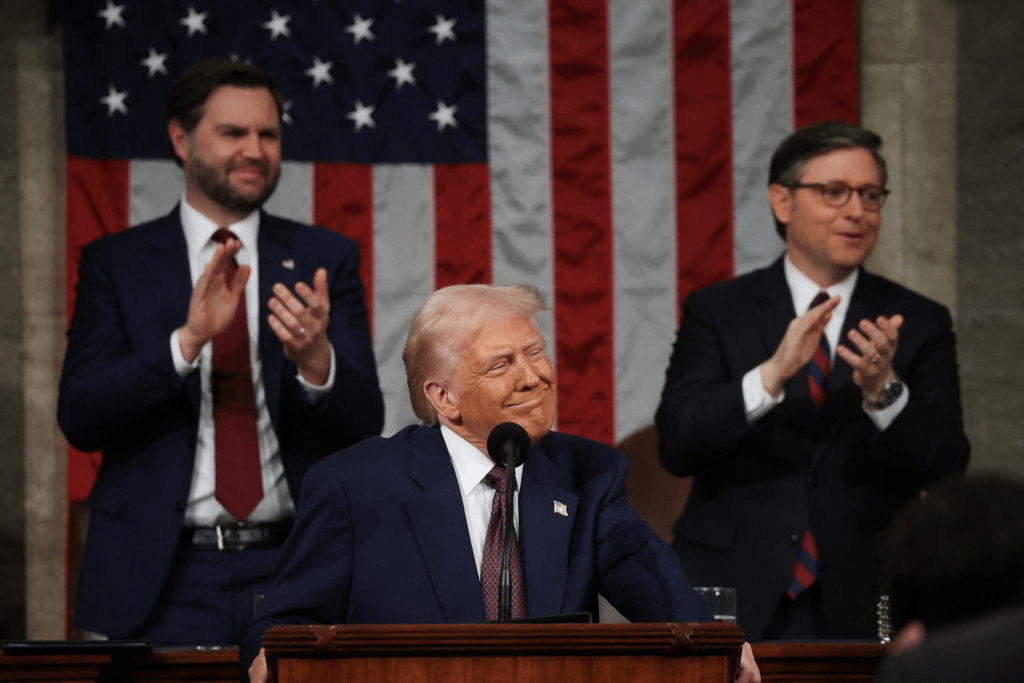
The primary point of the speech is that America is in the process of experiencing an economic recovery as well as gaining more national strength. According to Trump, this can be seen in terms of job creation, reduction in inflation, and advancements in industry. The theme of a strong economy and prosperity was repeated throughout the speech in order to support Trump’s assertion that further leadership from him is needed. In addition to economic issues, there were many mentions of immigration and border security. Here Trump was focusing on how stricter laws would ensure safety and stability. Furthermore, foreign policy played another important role in this speech. The key aspects included readiness of the military force and national strength when it came to the conflicts in the Middle East.
Logos, pathos, and ethos are all present from a rhetorical point of view. Logos is used through statistics and statements about economics that imply tangible progress is being made. This can be misleading at times since numbers can be taken out of context. There is also the use of pathos as the sections on safety, immigration, and patriotism are very emotionally driven and seek to evoke a sense of urgency and unity within the nation. Ethos is created by the speaker through the consistent portrayal of himself as a strong and successful leader that produces results. The speech works very well for its intended audience because it confirms everything they believe to be true, but fails to incorporate the opinions of critics.

Framing of this political event through the media is clearly evident because there was a huge difference in media coverage of the speech in different media outlets. For instance, CNN’s media framing included analyzing the speech and verifying whether the claims made by the politician in the speech were valid. Thus, CNN framed the speech in a way that emphasized the importance of holding politicians accountable for their claims. At the same time, Fox News provided coverage of the speech by presenting it as one where the politician demonstrated high confidence and spoke about leadership and economic growth. Finally, BBC framed the speech by taking a neutral stance regarding political divides in America.
These distinctions illustrate the principle of media framing, whereby the same incident can be framed differently based on the editorial slant, viewer expectations, and political stance. Whereas CNN places a greater focus on doubt and validation, Fox News concentrates more on success and influence, and BBC focuses on international importance and impartiality. None of these approaches are entirely wrong, yet all bring out different features from the same address. It indicates that traditional media outlets provide valuable information, yet they are not entirely unbiased, and viewers need to examine their sources critically.
Reactions on social media sites, such as Twitter, were equally polarized and emotionally laden. Proponents of the speech released excerpts and quotes from it, which emphasized positive readings of it and emphasized particular passages that seemed particularly powerful or patriotic. Detractors, on the other hand, pointed out statements made by the speaker that could be considered controversial, or statements that were outright false, using humor or sarcasm to make their points. Social media, unlike traditional media, does not operate on the basis of professional reporting; therefore, incomplete information is frequently circulated.
This relates to some very crucial elements of communication like selective exposure and confirmation bias, where people will have an inclination toward content that conforms to their beliefs. This is further facilitated by the use of algorithms by social media companies that provide recommendations based on similar content. The role of social media also entails increased misinformation and a greater tendency towards emotional reactions rather than critical reasoning.
Overall , my comprehension of the speech is more objective and nuanced than both traditional and social media coverage. In itself, the speech is a well-made piece of persuasion and argumentation, yet highly selective. Traditional media tends to be more trustworthy since it offers analysis, yet its bias may also come through depending on the channel used. Social media serves its purpose in gauging public reaction, yet it is less credible due to emotionalism and fragmentation of information. Politicians tend to look quite different in person than how they appear in media accounts, which underlines the significance of juxtaposing various sources. It brings up critical issues regarding political discourse and journalism in terms of audience analysis, as it indicates that people should always make informed decisions without succumbing to one-sided arguments.
References
https://www.bbc.com/news/articles/cvg34exn93jo
https://www.cnn.com/interactive/2026/02/politics/donald-trump-sotu-address-vis/
https://www.pbs.org/newshour/politics/read-trumps-full-2026-state-of-the-union-address


Leave a comment