Advertising goes beyond mere marketing and plays an important role in shaping self-image. As per the course literature, advertisements shape culture by advocating ideals that become normal to individuals over time. In addition to reflecting societal values, lifestyles and identities, advertising promotes such ideals through repeated portrayal. The norms in society evolve over time, and thus do their advertisements. A significant aspect of advertising over time is reflected in how it portrays different ideals related to gender, success and identity, for instance. One way of observing this would be to compare an old advertisement with its modern version. For instance, we can use the 1950s advertisement “He’s Twice the Man He Used to Be!” with the modern advertisement for a similar item to illustrate cultural evolution.
Historical Ad analysis
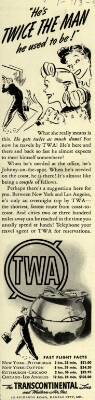
First of all, what catches the reader’s eye is the bold heading “He’s Twice the Man He Used To Be!” This heading is meant to get the audience’s attention while suggesting a change of a sort. From the information provided, the ad is suggesting that if one smokes Lucky Strike, he will gain some additional self-confidence and masculinity, becoming even better.
There are several types of advertising techniques that were used to create this ad. First of all, there was an attempt at an appeal through emotions since the ad focuses on confidence. Another technique used is puffery because the ad tries to suggest that with Lucky Strikes, a smoker becomes twice the man he used to be. From various sources related to advertising analysis, it is known that cigarette ads during that period of time usually depicted people who seemed to be happy with their life .Also, the ad perfectly fits into the gender stereotypes typical of the 1950s. Masculinity is depicted as something to be proved. Thus, the male gender role entails a combination of assertiveness and dominance, and women are supposed to admire these characteristics. These are some of the cultural standards of that time when the boundaries of gender roles have been set more clearly.
What is interesting about this advertisement is that smoking is normalized in society. There is no discussion about the hazards of smoking, while the cigarette brands launched very aggressive advertising campaigns. For instance, Lucky Strike was one of such brands that engaged in highly persuasive marketing strategies. Smoking becomes a part of culture and even a way to benefit from the habit.
Undoubtedly, the target audience of this advertisement includes males trying to establish their masculine identity and gain social acceptance and approval. The purchase of the cigarette pack is an essential step in defining one’s masculine identity. In other words, this ad is aimed at selling identity, not goods.
Modern day ad

However, advertisements about cigarettes or smoking have totally changed their tone in the contemporary world. Now, advertisements about cigarettes or smoking discourage people from engaging in such an activity, and the images in the advertisements may depict health consequences that arise because of cigarette smoking.
These advertisements use fear appeal and informational appeal. The glamorization of cigarettes as in the previous era no longer exists; instead, fear appeal has been used to show that smoking is dangerous and can cause serious health consequences. It shows the change of cultural values in the modern society. The role of science
Other major differences include the portrayal of masculinity. Contemporary advertising no longer tries to define what constitutes a “real man.” Rather, it embraces individuality and personal freedom. The advertising in today’s world is also more varied, often depicting individuals from various walks of life as opposed to a stereotypical figure.
Modern technology also plays a role in shaping advertising. Sources in the ad tech industry indicate that contemporary advertising relies heavily on data analytics and technological tools to create more targeted marketing campaigns. Therefore, instead of one marketing campaign aimed at all consumers, different marketing campaigns can be created for various audiences.
Cultural shifts and comparison
The comparison of both advertisements proves that changes have occurred not only within the scope of advertisement but also within society itself. On the one hand, the early 1950s advertisement encourages young males to engage in smoking to be masculine and socially approved. Modern advertisements emphasize health benefits, consciousness, and individuality.
First of all, values have been changed significantly. Earlier, it was crucial for an advertisement to stress the importance of being an integral part of society and meeting its demands (gender roles). Currently, advertisements emphasize personal well-being and genuineness. Moreover, the perception of relationships has also been transformed. According to the 1950s advertisement, males should try their best to impress females, and modern advertisements do not emphasize approval; instead, they underline consciousness.
Secondly, the provision of information plays a significant role. The early 1950s advertisement does not acknowledge any harm associated with smoking. Nowadays, the population is aware of these negative consequences, and advertisements mention them. Thus, this feature proves the impact of the evolution of knowledge on advertising.
Finally, one may assume that one aspect has stayed unchanged, and this feature refers to the influence of advertising on culture and its development.
Conclusion
“Hes Twice the Man He Used To Be” is one particular example of what advertising did in the past that conveyed certain notions about masculinity and identity. It is only through comparing advertisements from then with those from the present day that one will be able to trace the shift in cultural values from conformity to tradition to health, individuality, and awareness. The development of technology, along with an improved perception of issues such as public health, plays a great role in these transformations. Yet the underlying aim of advertising stays the same as ever – to sway peoples’ minds and behavior.
Reference
Advertising Appeals (Overview). The Visual Communication Guy. (2023, May 9). https://thevisualcommunicationguy.com/business-communication/advertising-appeals-overview/
(2024, August 19). 12.5 advertising’s influence on culture. Mass Media in a Free Society. https://nic.pressbooks.pub/massmediainafreesociety/chapter/12-5-advertisings-influence-on-culture/
Epom. (2026, March 2). AD Tech 101: The full stack behind every ad you’ve ever seen. Ad Tech 101: The Full Digital Advertising Technology Guide. https://epom.com/blog/ad-server/ad-tech-101
“he’s twice the man he used to be!” / ad*access / duke digital repository. Duke Digital Collections. (n.d.). https://repository.duke.edu/dc/adaccess/T1926
 Site Title
Leave a comment